
Full Stack Development Guide
Discover the core of web development by learning the full stack foundation required to build complete applications. This article covers the essential roadmap, including front-end design, back-end logic, and database management, providing a clear path for beginners to become proficient developers.
 Study Abroad29 May, 2026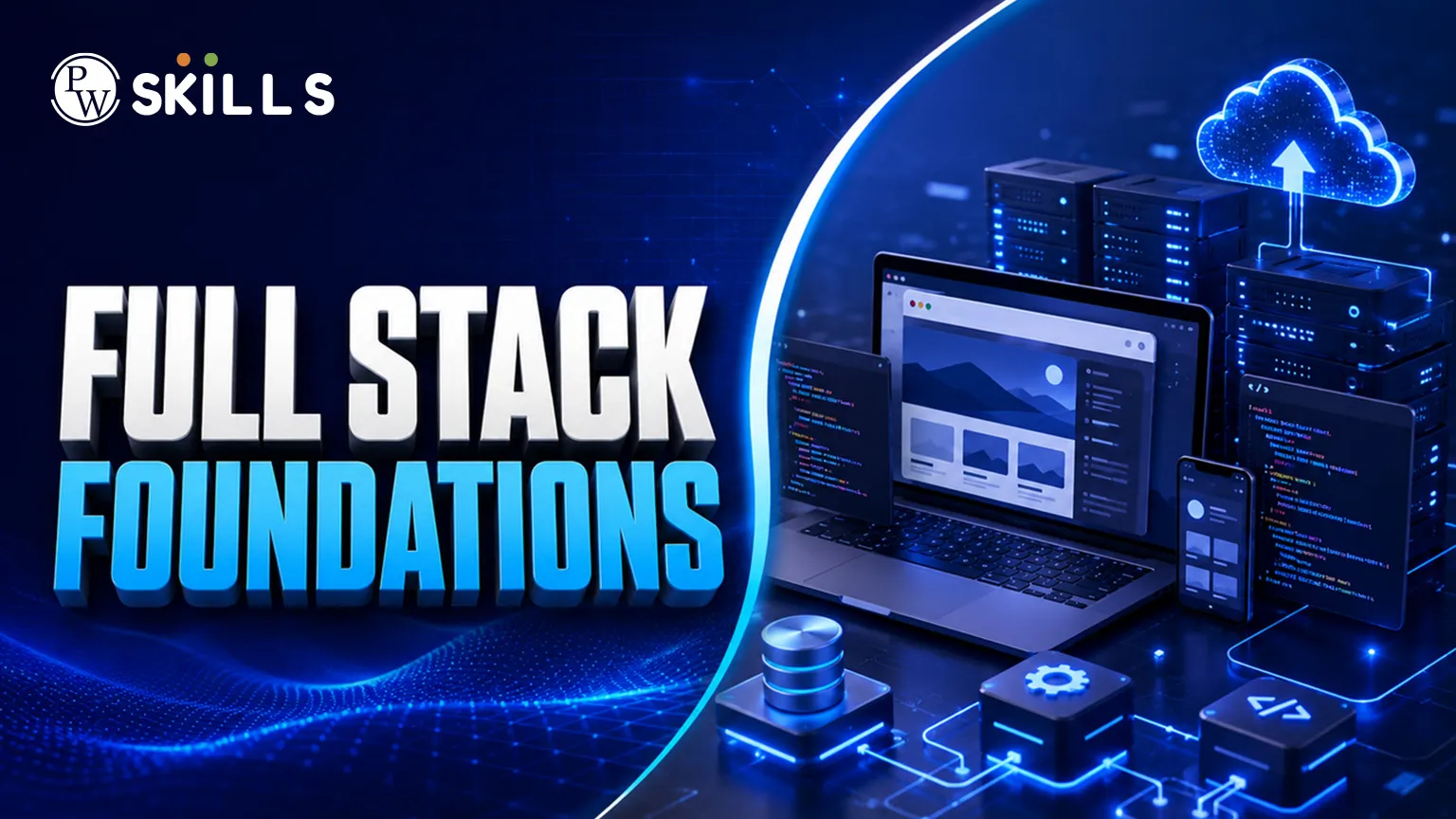
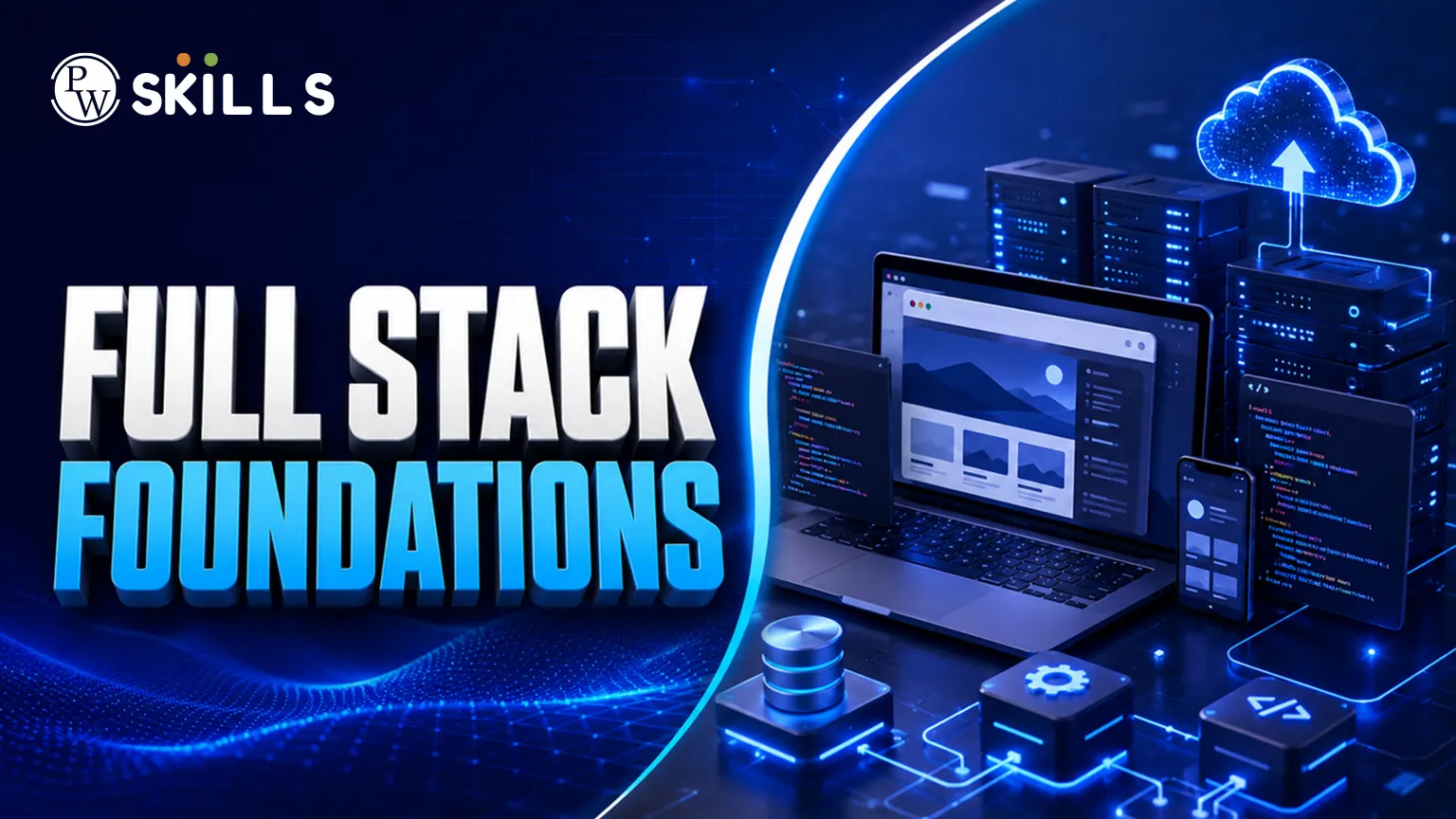
For a lot of ambitious developers, it's hard to connect the dots from a beautiful user interface to the complicated server logic that makes it work. This article overcomes that challenge by decomposing the web development cycle into manageable levels and focusing on the full stack foundations. By understanding how the front end, back end, and database interact, you may go from beginner to proficient developer, ready to construct scalable, real-world applications.
What are Full Stack Foundations?
The term full stack refers to the entire depth of a computer system application. To excel at full stack foundation, a developer must be comfortable working with both the "client-side" (what the user sees) and the "server-side" (the behind-the-scenes logic).
Building a solid base involves learning how to manage the user experience, handle data processing, and ensure that information is stored securely. Instead of just learning one tool, you learn how a collection of tools—often called a "stack"—works together to form a cohesive product.
Full Stack Foundations Roadmap
Navigating the world of web development is easier when you have a structured path. Following the roadmap ensures you don't miss critical components like version control or API integration.
Most successful developers follow this specific progression:
-
Front-End Development: Focusing on the layout, design, and interactivity using HTML, CSS, and JavaScript.
-
Back-End Development: Managing the server, application logic, and how the site communicates with the database.
-
Database Management: Learning how to store, retrieve, and update user data efficiently.
-
DevOps and Deployment: Understanding how to host the website and manage updates.
The following table provides a quick look at the primary technologies involved in these stages:
|
Layer |
Responsibility |
Common Technologies |
|
Front End |
User Interface & Experience |
HTML5, CSS3, React, JavaScript |
|
Back End |
Business Logic & APIs |
Node.js, Python, Express |
|
Database |
Data Storage & Security |
MongoDB, PostgreSQL, MySQL |
Full Stack Foundations Concepts
Before writing complex code, you must grasp certain full stack foundation concepts that govern how the modern web functions. These pillars ensure your application is fast, secure, and easy to maintain.
One of the most important concepts is the Request-Response Cycle. When a user clicks a button, a request is sent from the browser to the server. The server processes this request and sends back a response, usually in the form of data or a new webpage.
Another vital concept is State Management. This involves keeping track of user data—like items in a shopping cart—as the user moves from one page to another. Without proper state management, the user experience becomes fragmented and confusing.
Client-Server Architecture
The client is the browser (like Chrome or Safari) on the user's device. The server is a remote computer that stays on 24/7 to serve files. In this full stack foundations tutorial, we emphasize that the client "asks" and the server "provides."
HTTP and APIs
APIs (Application Programming Interfaces) act as the bridge between the front end and back end. They allow different software components to communicate using standard protocols like HTTP. Learning how to build and consume RESTful APIs is a non-negotiable skill for any developer.
Full Stack Foundations Skills
To excel in the industry, you need a balanced blend of technical and analytical abilities. These full stack foundational skills allow you to troubleshoot issues across the entire application rather than being limited to just the visual or logical side.
-
Proficiency in JavaScript: As the only language that runs natively in the browser and on the server (via Node.js), it is the backbone of modern web apps.
-
Database Modelling: Understanding how to structure data so it is searchable and scalable.
-
Version Control: Using tools like Git to track changes in your code and collaborate with other developers.
-
Web Security: Implementing basics like HTTPS, data encryption, and secure user authentication.
Full Stack Foundations Examples
Seeing how these components work in a real-world scenario helps solidify your understanding. Let’s look at some examples of common web features.
Example 1: A User Login System
-
Front End: A user enters their email and password into a form.
-
Back End: The server receives the credentials and checks them against the database.
-
Database: Stores the encrypted password and user profile information.
-
Action: If they match, the server sends a "success" token back to the browser.
Example 2: An E-commerce Product Page
-
Front End: Displays the product image and "Add to Cart" button.
-
Back End: Updates the user's virtual cart and checks if the item is in stock.
-
Database: Decreases the inventory count by one.
Full Stack Foundations Basics
If you are just starting, focus on the basics before moving to advanced frameworks like Next.js or Angular. Start by building simple static pages. Once you can style a page perfectly with CSS, add interactivity with JavaScript.
From there, introduce a simple server using Node.js. Try to make your webpage "talk" to your server. This incremental approach prevents burnout and ensures you understand the "why" behind the code, not just the "how."
Why choose a specific stack?
Different projects require different tools. For instance, the MERN stack (MongoDB, Express, React, Node.js) is highly popular because it uses JavaScript for everything. Other stacks might use Python (Django) or Ruby on Rails for the back end if the project requires rapid prototyping or specific data processing capabilities.
Full Stack Foundations Guide
Use this guide as a checklist for your learning journey. Do not rush to learn everything at once. The web landscape changes quickly, but the core principles of data flow, security, and user experience remain constant.
Focus on building three small projects:
-
A personal portfolio (Front-end focus).
-
A task-management app with a database (Full-stack focus).
-
A public API that serves data to others (Back-end focus).
By completing these, you will have a practical grasp of how the different layers of web development sit on top of each other to create a functional system.



FAQs
What is the best language to start with for full stack foundation?
How long does it take to learn full stack foundation basics?
Do I need to be a designer to learn the full stack?
What is the difference between a library and a framework?
Is database knowledge essential for full stack foundation?




 Live & recorded classes available at easeDashboard for progress trackingLakhs of practice questions

